Pistachios
Green tree nuts, now in high demand for chocolate and spreads.
Pistacia vera
Suitable for
- Vegan: yes
- Vegetarian: yes
- Gluten-free: yes
- Dairy-free: yes
- Nut-free: no
- Soy-free: yes
- Keto: it depends
- Low FODMAP: no
Contains
Tree nuts
Per 1 oz
Rich in copper, vitamin b6, thiamin (b1); a good source of manganese, phosphorus
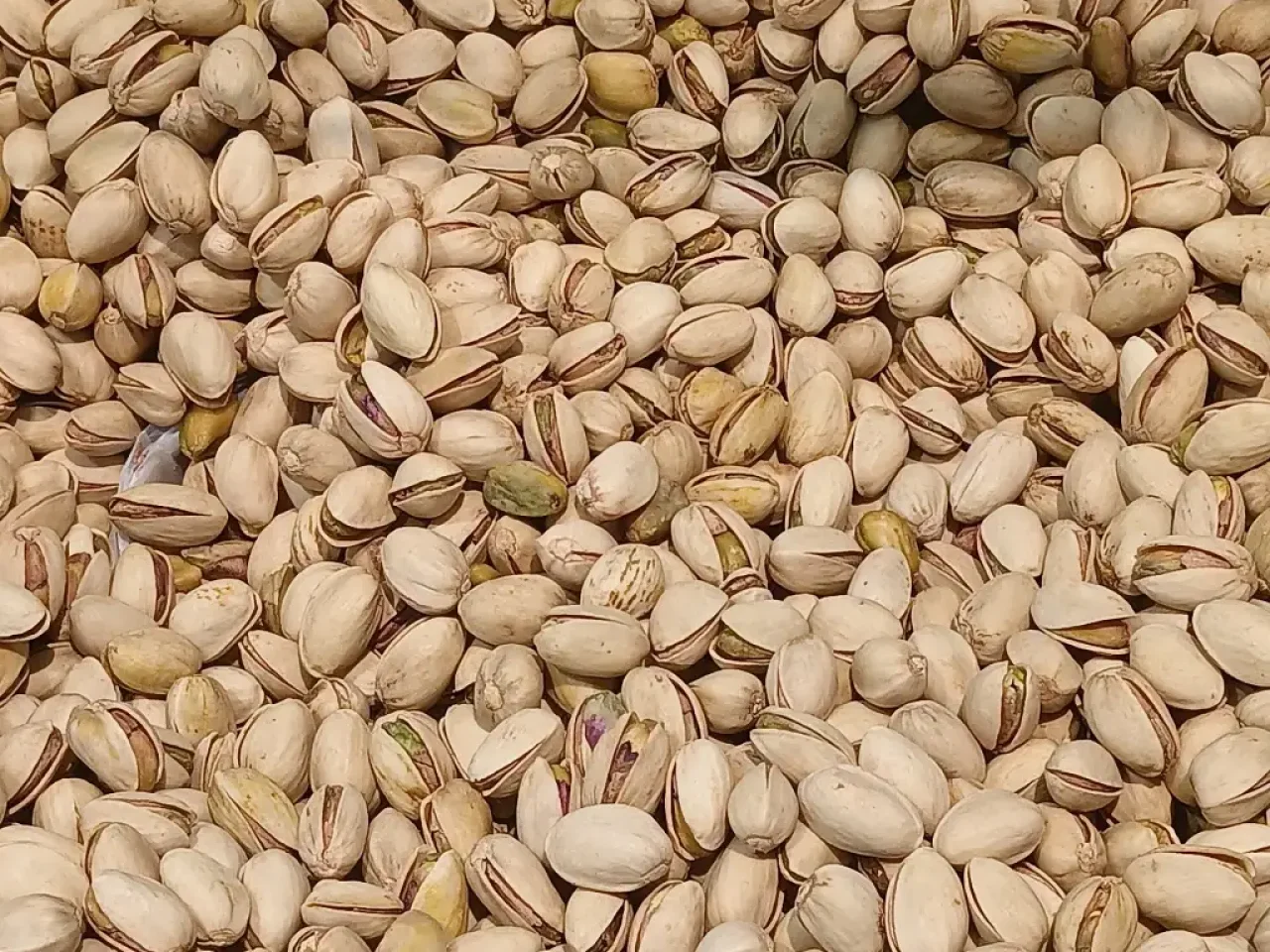
Pistachios are tree nuts with a sweet, buttery flavour. Their popularity has grown with Dubai chocolate, which pairs milk chocolate with pistachio cream.
Supply and prices
California's 2026 crop is far smaller than its record 2025 crop, and prices have risen.
Are pistachios vegan, gluten-free or allergen-free?
| Diet | Suitable? | Why |
|---|---|---|
| Vegan | Yes | |
| Vegetarian | Yes | |
| Gluten-free | Yes | Plain nuts contain no gluten. Check flavoured nuts and "may contain" warnings. |
| Dairy-free | Yes | |
| Nut-free | No | Pistachios are tree nuts. |
| Soy-free | Yes | |
| Keto | It depends | About 4.6 g of net carbs in 28 g, so portions need counting. |
| Low FODMAP | No | Reported as high in GOS even at 11 g. Check the Monash app for current portions. |
Contains: Tree nuts
Pistachios are tree nuts, so they are not suitable for people with a tree nut allergy. They are also closely tied to cashew allergy: in a Danish study of 40 young people assessed for tree nut allergy, all but one of the 18 people allergic to cashew were also allergic to pistachio.
Calories and nutrition in pistachios
| Nutrient | Per 1 oz (28 g) | Per 100 g |
|---|---|---|
| Calories | 157 kcal | 560 kcal |
| Protein | 5.7 g | 20.2 g |
| Carbohydrates | 7.6 g | 27.2 g |
| Sugars | 2.2 g | 7.7 g |
| Fibre | 3 g | 10.6 g |
| Fat | 12.7 g | 45.3 g |
| Saturated fat | 1.7 g | 5.9 g |
| Sodium | 0.3 mg | 1 mg |
Vitamins and minerals
| Nutrient | Per 100 g | % Daily Value per 28 g |
|---|---|---|
| Copper | 1.3 mg | 40% |
| Vitamin B6 | 1.7 mg | 28% |
| Thiamin (B1) | 0.87 mg | 20% |
| Manganese | 1.2 mg | 15% |
| Phosphorus | 490 mg | 11% |
| Magnesium | 121 mg | 8% |
| Potassium | 1025 mg | 6% |
| Iron | 3.92 mg | 6% |
| Zinc | 2.2 mg | 6% |
| Vitamin E | 2.86 mg | 5% |
"Rich in" means at least 20% of the adult Daily Value in one serving, and "good source" means at least 10%, following US label rules.
Raw pistachios, USDA FoodData Central.
Using pistachios in the kitchen
What pistachios taste like
Pistachios taste sweet and buttery, and the kernels are green and purple.
Substitutes for pistachios
| Substitute | How much | Best for |
|---|---|---|
| Almonds | Same weight | Baking and crusts. Milder and not green. Still a tree nut. |
| Sunflower seeds | Same weight | A nut-free option for toppings and pesto. Check for shared-facility warnings. |
How to store pistachios
Keep pistachios in an airtight container somewhere cool and dark. Their oils can go rancid, so the fridge or freezer is the better choice for keeping them longer. Throw them away if they smell like paint or taste bitter.
What to look for when buying pistachios
Shelled pistachios save time in recipes but usually cost more than in-shell nuts. For pistachio creams and spreads, read the ingredient list to see how much pistachio they contain, as many also include sugar, vegetable oil or milk powder.
Where pistachios come from
Pistachios most likely come from the foothills of southern Central Asia, where wild trees still grow, though researchers debate the exact centre of origin. Dates for domestication also vary. One 2023 review says cultivation began about 3,000 years ago in Iran, then reached Syria and, in Roman times, Italy.
Questions about pistachios
How many calories are in a handful of pistachios?
A 28 g (1 oz) serving of raw pistachios has about 157 kcal. Handfuls vary, so weigh them if you are counting.
Can I eat pistachios if I am allergic to cashews?
Not without medical advice. The two allergies often occur together, so ask your allergist before trying pistachios.
Recipes with pistachios

Snack · Dessert · Vegan · Gluten free · Dairy free
Pistachio Date Energy Balls
News about pistachios
California Pistachio Crop Set to Halve After a Record Year
Sources
- USDA FoodData Central: Nuts, pistachio nuts, raw
- Patterns of Clinical Reactivity in a Danish Cohort of Tree Nut Allergic Children, Adolescents, and Young Adults (Frontiers in Allergy, 2022)
- Pistachio (Pistacia vera L.) Domestication and Dispersal Out of Central Asia (Agronomy, 2022)
Last fact-checked 1 November 2026.
General information only, not medical advice. If you have an allergy or a health condition, check with your doctor or dietitian.