Cacao Allergens, Caffeine and What Labels Show
Cacao is a seed, not a tree nut, and plain powder has no major allergen as an ingredient. See shared-facility risks, caffeine and label checks.

- Calories
- 228 kcal per 100 g
12 kcal per 5.4 g - Rich in
- Copper
- Comes from
- Plant
- Vegan
- Yes
Cacao is the seed of the Theobroma cacao tree, sold as powder, nibs or whole beans. It is not a tree nut, and plain cacao powder has none of the major allergens as an ingredient. The real question for anyone with an allergy is how it was packed, so this page starts with the label.
A tablespoon is a small amount, and that changes the nutrition story. Cacao looks very high in magnesium and iron per 100 g, but one tablespoon gives only about 6% and 4% of the Daily Value. Copper is the only nutrient here that clears the "rich in" bar at that serving.
Calories and nutrition in cacao
| Per 100 g | Per 1 tbsp (5.4 g) | |
|---|---|---|
| Calories | 228 kcal | 12 kcal |
| Protein | 19.6 g | 1.1 g |
| Carbohydrates | 57.9 g | 3.1 g |
| Fibre | 37 g | 2 g |
| Fat | 13.7 g | 0.7 g |
| Saturated fat | 8.1 g | 0.4 g |
| Sodium | 21 mg | 1.1 mg |
Vitamins and minerals
| Per 100 g | % Daily Value per 5.4 g | |
|---|---|---|
| Copper | 3.79 mg | 23% |
| Manganese | 3.84 mg | 9% |
| Magnesium | 499 mg | 6% |
| Iron | 13.86 mg | 4% |
| Phosphorus | 734 mg | 3% |
| Zinc | 6.81 mg | 3% |
| Potassium | 1524 mg | 2% |
| Selenium | 14.3 µg | 1% |
Is cacao vegan, gluten-free or allergen-free?
Cacao is not one of the nine major allergens FDA names, but "no allergen ingredient" does not mean "allergen-free". Natierra's listing in USDA's database, for example, says "Packed in a facility that also handles milk and soy".
Milk is the best-documented risk in chocolate products. When FDA sampled 52 dairy-free dark chocolate bars and chips, four bars had potentially hazardous levels of milk and were recalled. That work did not test cacao powder, so treat it as a reason to ask questions, not as a measure of powder risk. FDA suggests asking manufacturers whether the equipment is dedicated and whether they test for milk.
True cacao allergy seems to be uncommon and poorly understood. A 2024 case report describes a woman with severe walnut and almond allergy who had anaphylaxis after dark chocolate and tested positive to pure cocoa. The authors suggest a possible link with some tree nut allergies, but this is one patient. If you have a tree nut allergy, speak to your allergist before assuming cacao is safe.
| Vegan | Yes | |
|---|---|---|
| Vegetarian | Yes | |
| Gluten-free | It depends | Plain cacao has no gluten ingredient. Look for a gluten-free claim or check for "may contain wheat". |
| Dairy-free | It depends | Plain cacao has no milk ingredient, but shared lines and facilities are a real risk. |
| Nut-free | It depends | Cacao is a seed, not a tree nut. Check the pack for nut warnings. |
| Soy-free | It depends | Plain powder has no soy ingredient. Some packs carry a shared-facility statement for soy. |
| Keto | Yes | About 1.1 g of net carbs per tablespoon of unsweetened powder. Sweetened mixes are different. |
| Low FODMAP | It depends | Monash data reported for 100% cocoa powder gives a low-FODMAP serving of 8 g, about 1½ tbsp. Check the Monash app. |
Where cacao comes from
Cacao has a longer history in South America than was once thought. Residues in pottery from Santa Ana-La Florida in the Ecuadorian Amazon show that the Mayo-Chinchipe people used it from at least 5,300 years ago. The evidence combines cacao starch grains, theobromine and ancient DNA. It dates use of the plant, so the conclusion that domestication began there is an inference.
What cacao tastes like
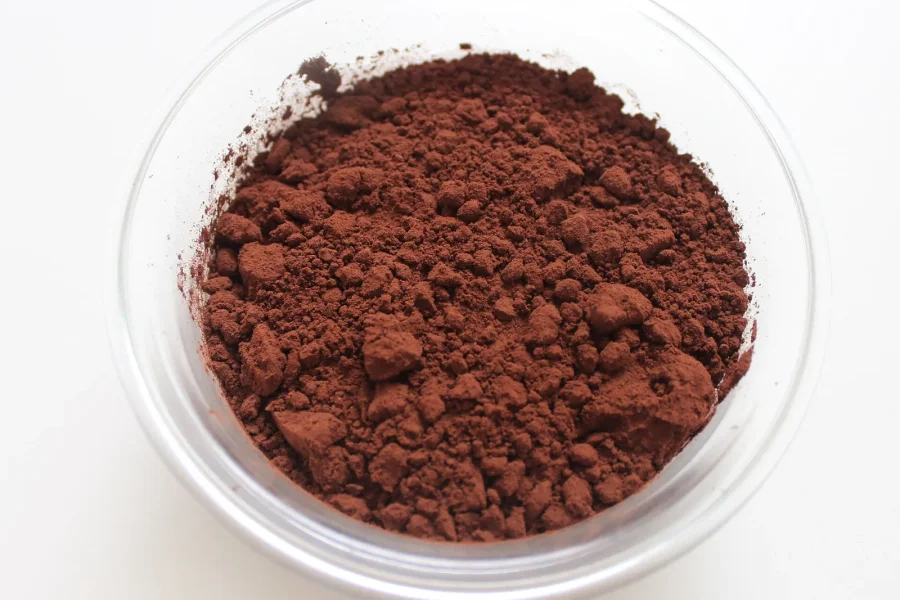
Plain cacao powder tastes bitter and dry, with no sweetness. It clumps easily, as the photo shows, so sift it or whisk it into a little warm liquid first.
How to use cacao
Most recipes need only a spoonful or two. Stir it into porridge, yogurt or smoothies, or blend it into no-bake snacks such as these pistachio date energy balls. Cacao nibs are crushed pieces of the bean. They add crunch, but they will not dissolve like powder.
Substitutes for cacao
| Substitute | How much | Best for |
|---|---|---|
| Natural cocoa powder | Same weight | Baking and drinks. Usually the same kind of product under another name. |
| Finely ground cacao nibs | Same weight, then taste | Smoothies and no-bake recipes. Grittier and fattier than powder. |
| Carob powder | Same weight, then taste | A cacao-free option for drinks and bakes. Milder and sweeter, and carob is a legume. |
What to look for when buying cacao
"Cacao" and "cocoa" are not reliable labels. USDA's database has a product sold as cacao powder with "organic cocoa" as its ingredient, and another that does the same. Judge the ingredient list, not the name.
Don't compare calories between labels. In November 2026 we looked up cacao powders in USDA's branded database and set aside blends such as maca or protein mixes. The 43 remaining records worked out at 200 to 700 kcal per 100 g, with a median of 400. USDA's lab-analysed cocoa powder is 228 kcal. Label figures often come from very small servings: one pack lists 20 kcal for 5 g, so a small rounded number becomes a big per-100 g figure. At one tablespoon the gap hardly matters.
For allergies, read three places: the ingredient list, the "contains" line, and any "may contain" or shared-facility sentence. A missing warning does not prove there is no risk, so contact the maker if your allergy is severe.
Ask about heavy metals. Consumer Reports tested cocoa powders for lead and cadmium and found large differences between products, as covered below. If this matters to you, ask the maker for test results.
How to store cacao
Keep cacao powder sealed in a cool, dry cupboard, and use the date on the pack as your guide. Throw it away if it smells musty or shows any mould.
Side effects and who should be careful
Caffeine: one tablespoon has about 12 mg of caffeine and 111 mg of theobromine, based on USDA's values. That is small next to the 400 mg a day FDA cites for most healthy adults, but cacao is not caffeine-free. If you are pregnant, breastfeeding or take medication affected by caffeine, ask your doctor.
Lead and cadmium: Consumer Reports tested 48 chocolate products in 2023 and found both metals in all of them. No cocoa powder went over its cadmium benchmark, but two were high in lead. One tablespoon of the Hershey's powder reached 125% of its lead benchmark, and Droste was higher. The benchmark is California's strict daily level, used for comparison and not as a legal test. Take this into account if you have cacao every day.
Dogs: keep it away from pets. Cocoa powder has more methylxanthines than baking or dark chocolate, so a small amount can make a dog ill. Call your vet if a dog eats some.
What the research says
The evidence is real but modest, and most of it does not use a kitchen spoonful of powder. A Cochrane review of 35 trials with 1,804 mainly healthy adults found blood pressure fell by about 1.8 mmHg in short trials, with moderate certainty. The doses were often high, averaging 670 mg of flavanols a day.
The largest trial, COSMOS, gave 21,442 older US adults 500 mg of cocoa flavanols a day as capsules. Its main result, total cardiovascular events, was not statistically significant after a median of 3.6 years. Cardiovascular deaths were lower, but that was a secondary result and needs confirming. Mars Edge helped fund the trial and supplied the capsules, alongside National Institutes of Health funding.
Questions about cacao
Is cacao a nut?
No. Cacao is the seed of the Theobroma cacao fruit and is not one of the tree nuts. Packs can still carry nut warnings from shared equipment, so check the label.
Are cacao nibs nut free?
The nibs themselves are cacao, not nuts, but that does not make every pack nut-free. Look for the maker's allergen statement, and treat a "may contain" warning as a real risk if you have an allergy.
Is cacao caffeine free?
No. Unsweetened cocoa powder has about 12 mg of caffeine per tablespoon in USDA data, and brands will vary.
Is cacao powder dairy free?
Plain cacao powder has no milk ingredient. Check for shared-facility wording and ask the maker if you have a milk allergy.
Recipes with cacao
Sources
- USDA FoodData Central: Cocoa, dry powder, unsweetened
- FDA: Food Allergies
- FDA: Sampling of Dairy-Free Dark Chocolate Products, FY18-19
- Allergy to Theobroma Cacao (Clinical Case Reports, 2024)
- Consumer Reports: Heavy metals in chocolate products (2023)
- FDA: How Much Caffeine Is Too Much?
- Merck Veterinary Manual: Chocolate Toxicosis in Animals
- Cochrane Review: Effect of cocoa on blood pressure (2017)
- COSMOS trial (American Journal of Clinical Nutrition, 2022)
- Zarrillo et al., early cacao use in Ecuador (Nature Ecology & Evolution, 2018), news release
- Rachel Pauls Food: Is chocolate low FODMAP? (reports Monash data)