Matcha
Finely ground Japanese green tea, made from shade-grown leaves.
Contains
None of the major allergens as an ingredient · Watch for added sugar in mixes
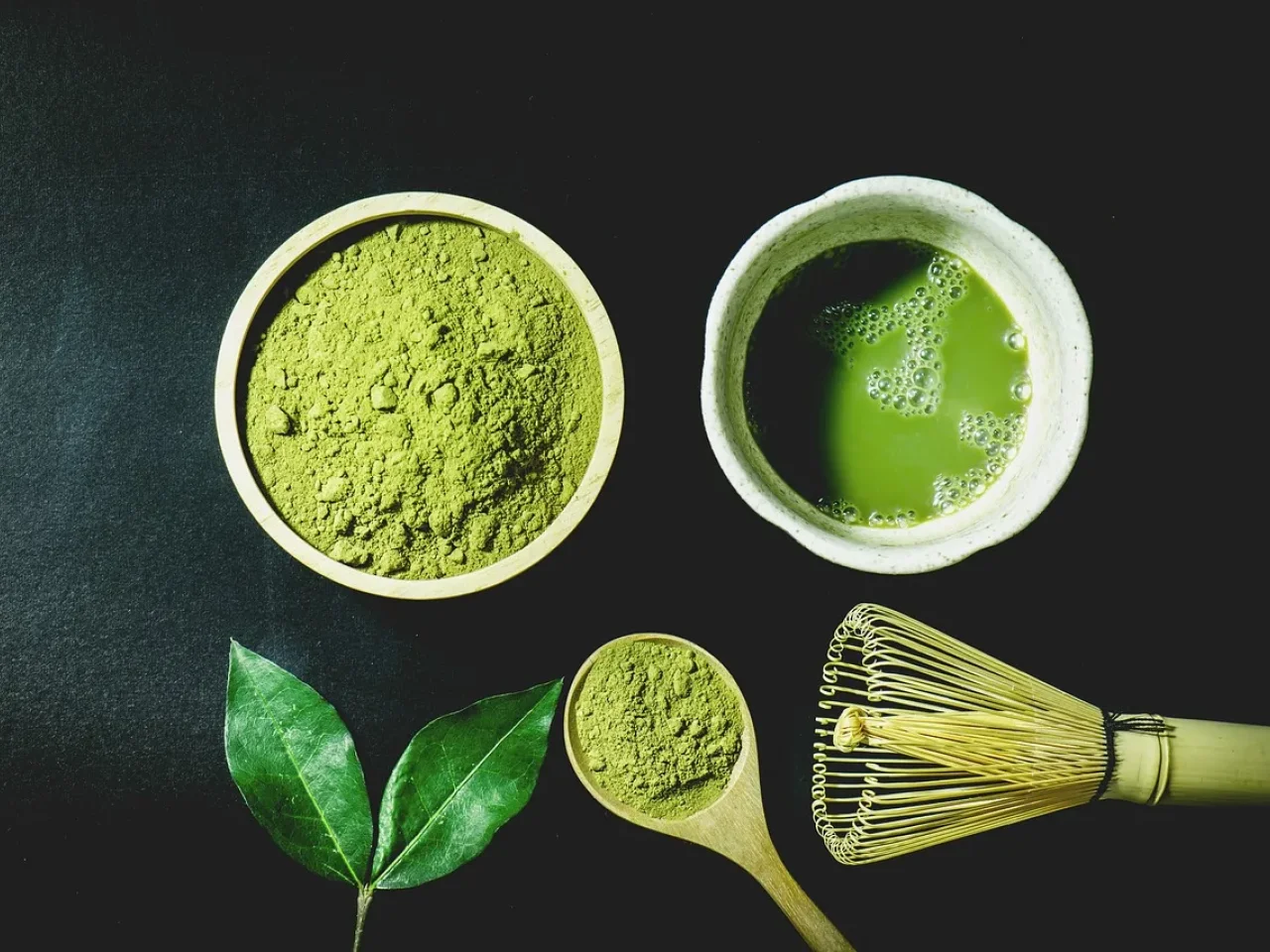
Matcha is green tea ground into a fine powder. The plants are shaded for about two to three weeks before harvest. The leaves are then dried without rolling and stone-milled, which is slow work. Because you drink the whole leaf rather than an infusion, the flavour is stronger and more savoury than brewed green tea.
What to look for
Check that the ingredients list only matcha or green tea. Some "matcha" drink mixes are mostly sugar: one product in USDA's database lists cane sugar first and matcha third. Prices have also risen sharply, so compare the price per gram.
Calories and nutrition in matcha
| Nutrient | Per 2 g | Per 100 g |
|---|---|---|
| Calories | 6 kcal | 315 kcal |
| Protein | 0.4 g | 22 g |
| Carbohydrates | 0.5 g | 26.2 g |
| Fat | 0.1 g | 5.1 g |
Listed values for Ceres Organics matcha powder. Labels vary widely between brands. A typical 2 g serving is only a small fraction of these amounts.
What the research says
A year of daily matcha made no significant difference to the main cognitive measures.
99
older adults with cognitive decline
12 mo
trial length
2 g
matcha a day
Worth knowing: many of the study's authors work for ITO EN, the company that supplied the matcha.
In this 12-month trial, one measure of reading emotions improved, and there was a non-significant trend in sleep scores. The study was small, so treat these as leads rather than proof.
Recipes with matcha
Breakfast · Snack · Vegan · Gluten free · Dairy free
Iced Matcha Latte
News about matcha
Matcha Prices Keep Climbing Despite a Bigger 2026 Tea Harvest
About this page
General information only, not medical advice. If you have an allergy or a health condition, check with your doctor or dietitian.